
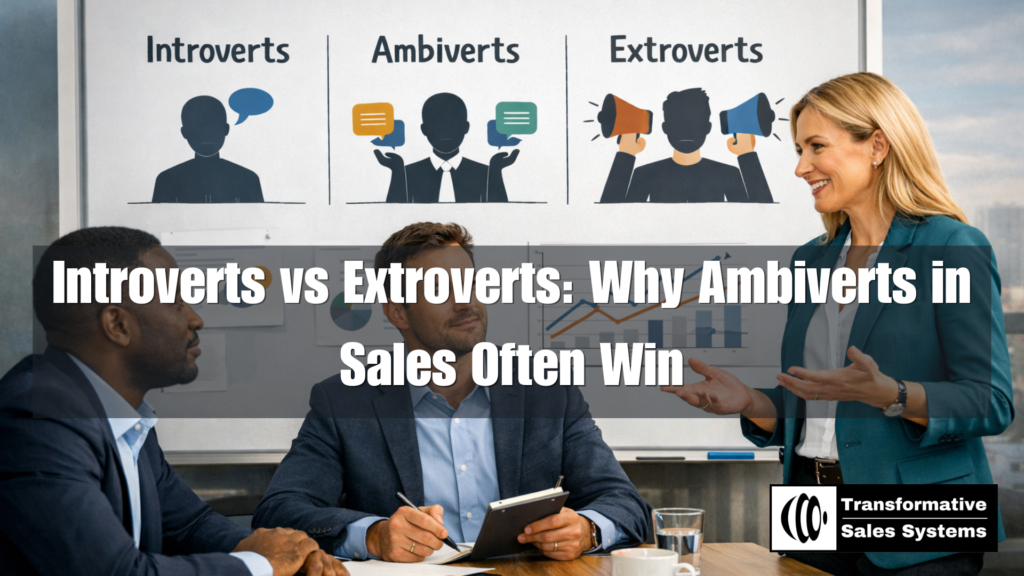
Introverts vs Extroverts in Sales: Why Ambiverts in Sales Often Win
For years, sales has been stereotyped as an extrovert’s game. Talkative. Charismatic. Always on. The kind of person who can work a room, handle rejection without blinking, and keep a conversation moving no matter what. That image has been around a long time, and to be fair, there are parts of sales where that kind of personality can help. But the stereotype has also caused a lot of business owners and sales leaders to believe something that is not fully true: that the louder personality is automatically the better salesperson.
It is not that simple.
When you look more closely at how good sales actually works, especially in today’s environment, the best salesperson is usually not the one who talks the most. It is the one who can read the situation, ask good questions, listen well, adjust their approach, and create trust. That is where this conversation gets interesting, because it is often the ambivert in sales who has the edge.
An ambivert in sales sits somewhere between the two ends of the personality spectrum. They can be outgoing when the moment requires confidence and energy, but they can also slow down, listen, and let the buyer talk. According to research from Adam Grant, ambiverts outperformed both strong introverts and strong extroverts in a study of outbound sales representatives. The reason was not magic. It was balance.
Why Ambiverts in Sales Often Perform Better
Ambiverts in sales tend to have one major advantage. They do not get stuck in one gear.
A strong extrovert may build rapport quickly, but can also talk too much, push too hard, or miss buying signals because they are busy driving the conversation. A strong introvert may listen deeply and think carefully, but can sometimes struggle to assert control, ask hard questions, or keep momentum moving. Ambiverts are often better positioned to do both. They can create energy when needed and pull back when needed.
That matters because selling is not a performance. It is a series of judgments. When to probe deeper. When to stop talking. When to challenge. When to empathize. When to advance the opportunity. When to walk away. Ambiverts tend to navigate those shifts more naturally than someone stuck at either extreme.
Are Introverts Good at Sales?
Yes, absolutely. Introverts in sales can be very good, and in some environments they can be outstanding.
One of the biggest strengths introverts bring is listening. Real listening, not the fake kind where someone is just waiting for their turn to speak. Buyers notice the difference. Introverts are often more deliberate, more thoughtful in discovery, and better at absorbing details that lead to better solutions. They may not be the flashiest people on a sales team, but flashy does not close deals by itself.
Introverts also tend to do well in complex sales, consultative selling, account management, and relationship-based environments where trust matters more than showmanship. If the sale requires understanding business pain, diagnosing issues, and helping a buyer think clearly, introverts can be extremely effective.
Where introverts in sales sometimes need support is in assertiveness, follow-up urgency, handling tension in difficult conversations, and maintaining enough outward energy to move an opportunity forward. That is not a personality flaw. That is a coaching opportunity.
Do Extroverts Have an Advantage in Sales?
Sometimes, yes. Extroverts in sales can absolutely succeed. In the right role, they can thrive.
Extroverts often have no problem starting conversations, building initial rapport, making calls, walking into unfamiliar situations, and bouncing back from rejection. In roles that require a high level of activity, social confidence, and fast engagement, that can be a major asset. Prospecting roles, networking-heavy environments, and some transactional selling situations can reward those traits.
But extroverts can also create their own problems. They may speak too soon, rush discovery, dominate the conversation, and mistake enthusiasm for effectiveness. That is where a lot of sales leaders get fooled. A salesperson can look impressive and still not be running a disciplined sales process. A rep who talks well is not automatically a rep who qualifies well.
The best extroverts in sales learn how to slow down, ask better questions, and stop trying to win the meeting with personality alone.
Does Personality Type Really Matter in Sales?
Yes and no.
Personality matters because it affects natural tendencies. It shapes how a salesperson communicates, processes information, builds rapport, handles rejection, and manages energy. But personality is not destiny. It does not excuse weak selling habits, and it does not guarantee success.
What matters more is whether the salesperson understands their strengths, knows where they can get in their own way, and is being coached inside a real sales process.
That is the part too many companies miss. They spend too much time asking whether they should hire introverts or extroverts and not enough time asking whether they have clear stages, strong qualification standards, good coaching, and accountability. A weak sales system will make all personality types underperform. A strong sales system gives different personality types a way to win.
How Sales Leaders Should Coach Different Personality Types
This is where the discussion becomes useful for business owners and sales managers.
If you are leading introverts in sales, help them become more assertive in controlling the process. Coach them on asking tougher questions, gaining commitment, and not hiding behind being “nice” when the deal needs directness.
If you are leading extroverts in sales, help them slow down. Coach them on discovery, active listening, qualification, and resisting the urge to jump into presentation mode too quickly.
If you are leading ambiverts in sales, do not assume they need less coaching just because they are naturally balanced. They still need process discipline, deal strategy, and accountability. Their flexibility is a strength, but only if it is backed by consistent execution.
Sales leadership should not try to turn everyone into the same type of salesperson. It should help each person perform at a high level within a structured process.
The Real Answer
So who reigns supreme in sales: introverts, extroverts, or ambiverts?
If you force me to pick, the data suggests ambiverts often have the edge. They tend to balance talking and listening better than extreme extroverts and extreme introverts.
But the bigger truth is this: there is no single perfect personality for sales.
There are successful introverts. There are successful extroverts. There are successful ambiverts. What separates the good from the mediocre is not just personality. It is self-awareness, coachability, discipline, and the ability to operate inside a repeatable sales process.
If your team has talented people but inconsistent results, the problem may not be personality at all. It may be a lack of structure, coaching, and sales leadership. That is exactly where a strong sales management system changes the game and Transformative Sales Systems helps business owners build the structure their sales teams need to perform.
FAQs
Are ambiverts better at sales?
Research suggests ambiverts often outperform strong introverts and strong extroverts because they balance talking and listening more effectively.
Can introverts be successful in sales?
Yes. Introverts often perform well in consultative sales because they tend to listen carefully, think deeply, and build strong relationships.
Do extroverts make the best salespeople?
Not always. Extroverts can be strong in prospecting and rapport building, but they can struggle if they dominate conversations or move too quickly.
What is the best personality type for sales?
There is no single best personality type for sales. Success depends more on self-awareness, coachability, process discipline, and the ability to adapt.
How should sales managers coach different personality types?
Sales managers should coach introverts on assertiveness and deal control, extroverts on listening and qualification, and ambiverts on consistency and process execution.
Transformative Sales Systems
812-924-7085
Schedule a 30 minute meeting: https://calendly.com/anthony-nicks/30min
Learn more about Fractional Sales Management at https://transformativesalessystems.com/sales-leadership/
Read more about Fractional Sales Management: https://www.amazon.com/dp/B0FLWSXX5D